
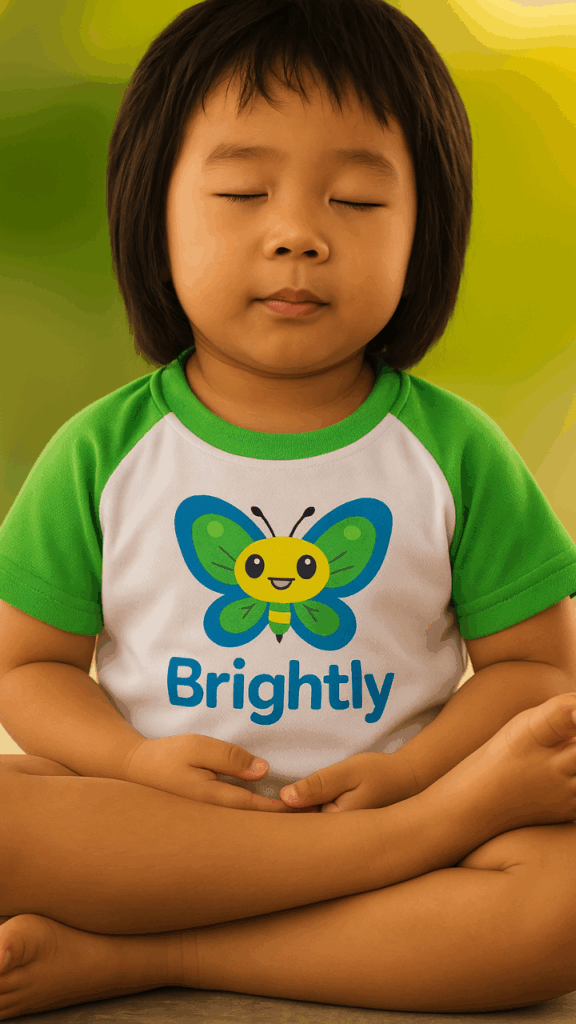
“Mindfulness allows children to see the world through a lens of presence, helping them navigate emotions with calm and clarity, one breath at a time.”
Parents want their children to grow up feeling calm, focused, and connected to the world around them. In an ideal world, school and care givers incorporate these social and emotional regulation tools early because we know that the neural pathways are very malleable before the age of seven, and we want to support creating positive neural wiring pathways in the little children’s brains! One powerful tool that can support children in building these essential life skills is mindfulness.
But what exactly is mindfulness for children, and how can you start practicing it with your preschooler? In this blog post, we’ll explore what mindfulness is, share simple activities to try at home, and help you nurture your child’s emotional well-being from a young age.
What is Mindfulness for Kids?
Mindfulness is the practice of being fully present in the moment, paying attention to thoughts, feelings, and sensations without judgment. For children, it means learning how to tune into their bodies, emotions, and surroundings, which can improve focus, emotional regulation, and self-awareness. Practicing mindfulness can empower preschoolers to build resilience, reduce stress, and cultivate empathy.
Examples of Mindfulness Activities for 3 to 6 Year Olds:
Breathing Buddies
A simple and fun exercise, this one uses a soft toy or stuffed animal to teach deep breathing. You can have your child lie on their back and place the toy on their belly. Please encourage them to take slow breaths, watching how the toy rises and falls. This activity helps children connect with their breath and begin calming their minds and bodies.
Mindful Walking
Take a walk together and invite your child to pay attention to each step. You can call it “listening to your feet.” As you walk, encourage them to notice the sounds, sights, and sensations around them. Whether it’s the rustling of leaves or the feeling of grass underfoot, mindful walking helps children practice being present in the world.
The Magic of the Senses
An excellent activity for developing mindfulness through the five senses. Sit with your child in a quiet place and go through each sense one at a time. Ask them to describe what they hear, see, smell, touch, and taste. This exercise builds awareness of the world around them and promotes a deeper connection to the present moment.
Mindful Listening to Sounds
This exercise encourages your child to focus on sounds in their environment. Ring a bell, clap your hands, or play soft music, and ask your child to listen carefully. See if they can identify specific sounds or how long they last. It’s an easy and fun way to develop attention and mindfulness skills.
Gratitude Journal
While gratitude may seem like an advanced concept for young children, it can be easily practiced by focusing on what they’re thankful for. Encourage your child to recall three things they loved about their day. It could be as simple as the smell of cookies baking or playing with a friend. This exercise fosters positive thinking and helps preschoolers develop an appreciation for the little things.
How Do You Teach Mindfulness at Home?
Teaching mindfulness at home is easier than you might think! Here are some simple steps to get started:
- Make it Fun: Kids love games and activities, so turn mindfulness into a playful experience. Use stories, toys, and imaginative exercises to keep them engaged.
- Practice Together: The best way to teach mindfulness is by practicing it yourself. Kids model what they see, so try doing mindfulness activities together as a family. This activity reinforces the idea that mindfulness is a helpful tool for everyone, not just for children.
- Be Consistent: Set aside a few minutes each day to practice mindfulness. Consistency is key in helping your child build these skills over time.
- Create a Calm Environment: Designate a special mindfulness corner in your home where your child can practice breathing exercises or simply relax. You could add a soft rug, calming colors, and quiet toys to make it a peaceful space.
- Use Positive Reinforcement: Praise your child when they engage in mindfulness. Positive reinforcement encourages them to keep practicing and helps build a foundation for emotional well-being.
Conclusion:
Mindfulness is a wonderful way to support your preschooler’s emotional growth and set them up for a lifetime of well-BEing. By starting early with simple, fun mindfulness exercises, you can teach your child valuable skills like focus, emotional regulation, and self-awareness. You are supporting your children to build a strong foundation for life! And remember, teaching mindfulness is not just about the exercises, it’s about creating a peaceful, loving environment where both you and your child can learn, grow, and thrive together.
What is one of your favorite tools to embrace? Or, which of these are you going to try next?